

Cardiac diagnostics healthcare events across Turkey, Morocco and Spain revealed one repeating challenge over the past several weeks: Heart Failure is still being detected too late.
From cardiovascular surgeons in Antalya, to digital-health innovators in Casablanca, to heart-failure specialists in Barcelona, one message appeared again and again:
Healthcare systems still struggle to detect Heart Failure and structural heart disease early enough.
And clinicians know it.
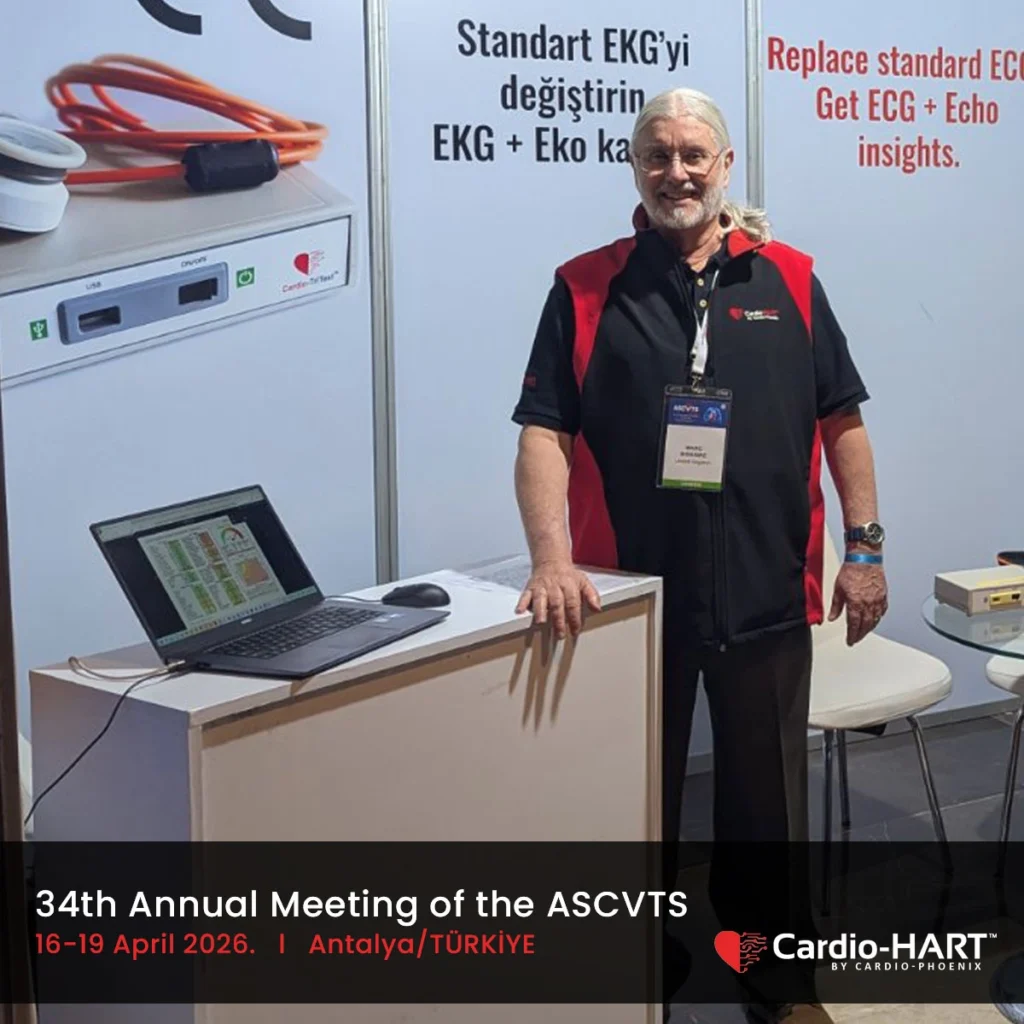
Antalya: “ECG Alone Leaves Too Many Questions”
At ASCVTS 2026 in Antalya, discussions with cardiovascular specialists quickly moved beyond AI hype and into a much more practical clinical reality:
What happens when frontline cardiac testing provides incomplete answers?
For many clinicians, ECG remains the first-line cardiac test because it is fast, accessible, and deeply integrated into existing workflows.
But ECG evaluates primarily electrical activity.
Most Heart Failure and valve disease cases are structural or functional problems, typically confirmed later through echocardiography.
That gap creates a difficult clinical challenge:
- patients present with symptoms,
- ECG may appear inconclusive or borderline,
- and access to echocardiography often takes weeks or months.
During conversations at ASCVTS, many clinicians recognized this problem immediately because they see it every day in real practice.
This is where interest around Cardio-HART became especially strong.
The system was designed as a direct replacement for standard ECG workflows while adding structural and functional cardiac insight associated with echocardiography.
Casablanca: The Reality of Diagnostic Access in Emerging Regions
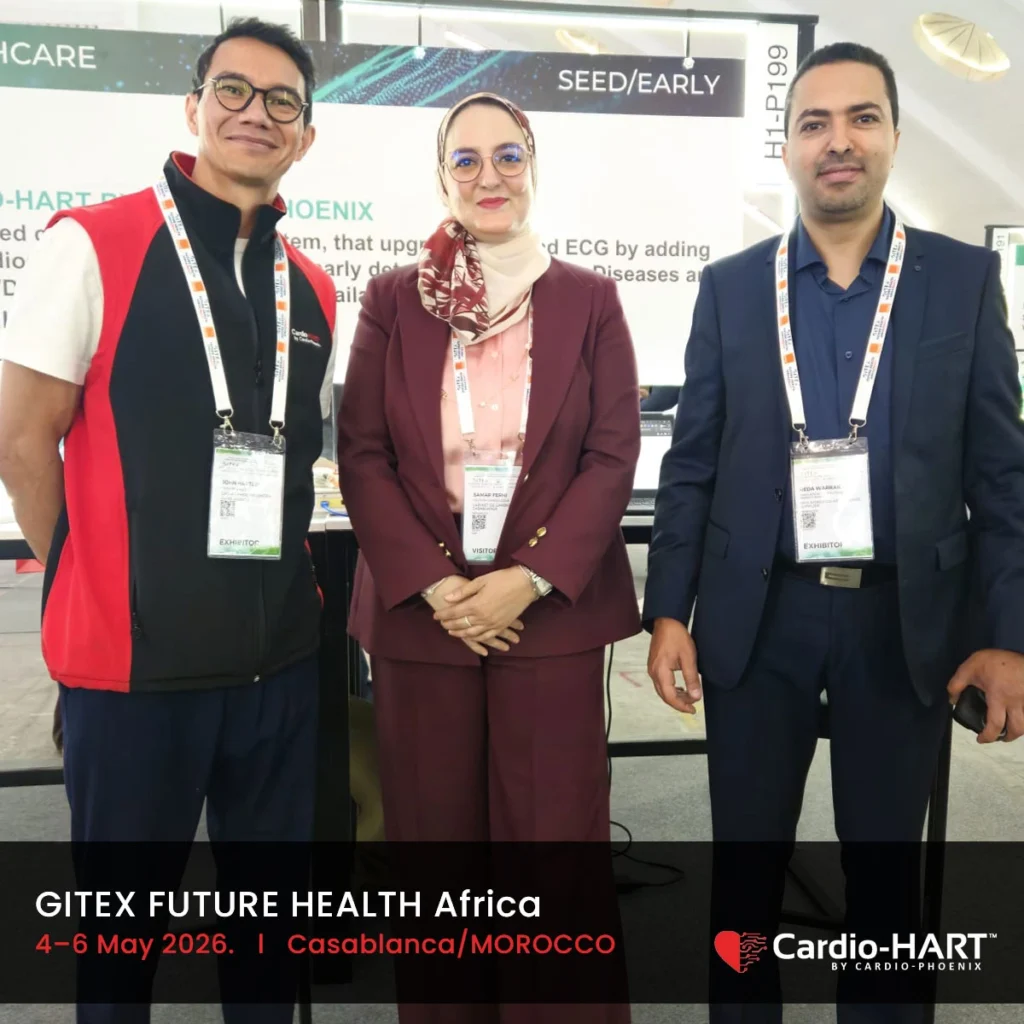
At GITEX Future Health Africa in Casablanca, the conversations became even broader.
The focus was no longer only diagnostic performance.
It became about healthcare accessibility.
North Africa faces a significant cardiovascular burden, while many regions continue to experience limited access to specialist cardiac imaging and cardiology services.
For many frontline environments, especially outside major urban centers, waiting for echocardiography can mean delayed diagnosis, delayed treatment, and disease progression before intervention even begins.
This created strong interest in point-of-care diagnostics capable of supporting earlier cardiac assessment directly within frontline care settings.
One of the strongest discussions during the Morocco event centered around operational simplicity.
Clinicians and healthcare partners were particularly interested in the fact that Cardio-HART:
- requires no specialist operator,
- fits into existing ECG-style workflows,
- produces immediate results,
- and can support earlier referral prioritization.
The conversations in Casablanca reinforced a growing global reality:
Earlier cardiac detection is no longer only a hospital problem.
It is becoming a healthcare-system problem.
Barcelona: Heart Failure Detection Is Becoming a Frontline Priority
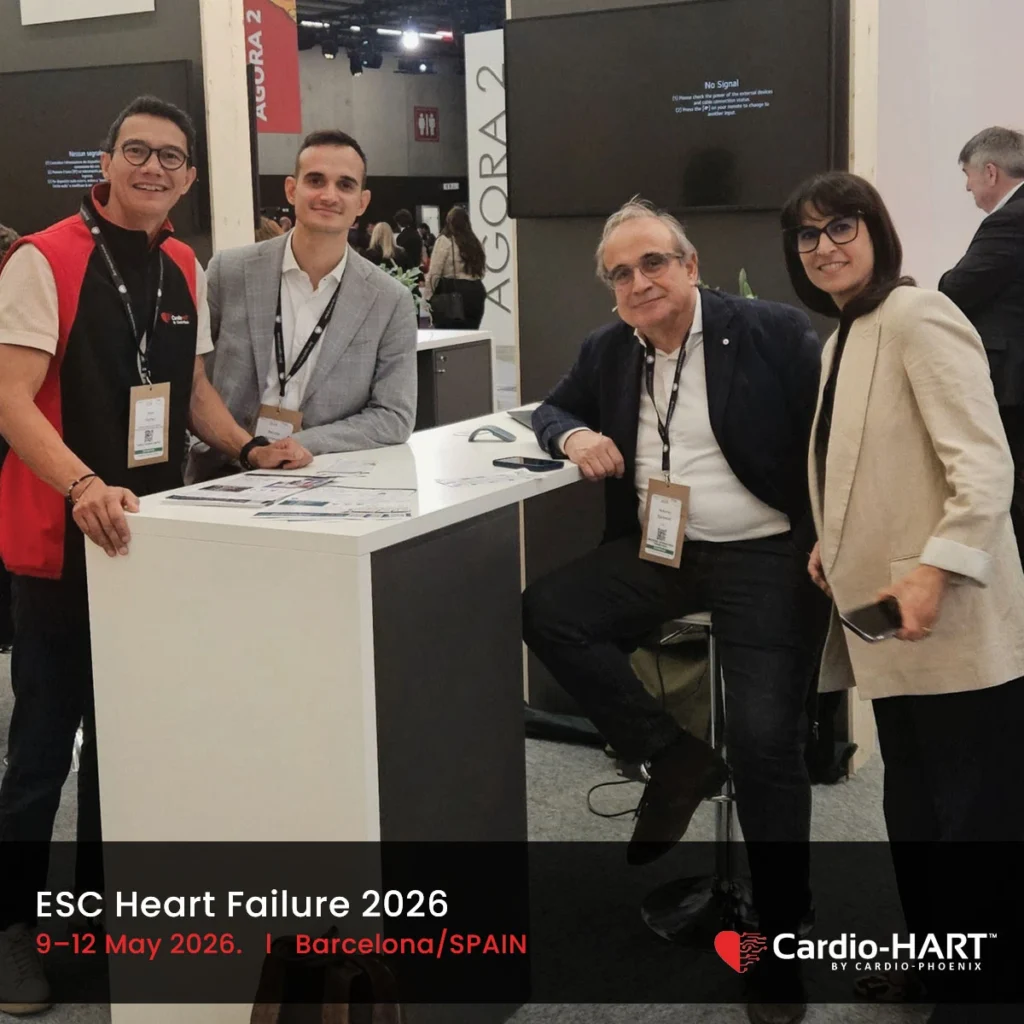
At ESC Heart Failure 2026 in Barcelona, the discussions became even more focused around one central issue:
Heart Failure detection pathways are still too slow.
Clinicians repeatedly discussed the challenge of identifying patients earlier, particularly patients with:
- HFpEF,
- mild ventricular dysfunction,
- valve abnormalities,
- or mixed structural-functional disease.
These patients often begin with vague symptoms:
- fatigue,
- shortness of breath,
- reduced exercise tolerance,
- fluid retention,
- or intermittent discomfort.
In many cases, ECG alone does not provide enough visibility into the underlying pathology.
This is one of the reasons why there was significant interest around technologies capable of bringing deeper cardiac insight closer to the first patient presentation.
At ESC, many conversations focused less on “AI” itself and more on something far more important:
Can clinicians make better referral decisions earlier?
That question continues to drive growing interest in AI-supported cardiac diagnostics across both Primary and Secondary Care environments.
What Cardiac Diagnostics Healthcare Events Revealed
Across all three events, one thing became increasingly clear:
Clinicians are not looking for more data.
They are looking for:
- earlier visibility,
- better triage confidence,
- faster decision support,
- and improved access to meaningful cardiac insight before patients deteriorate.
That is the clinical gap Cardio-HART was designed to address.
Cardio-HART combines AI-enhanced ECG, phonocardiography, mechanocardiography, and advanced cardiac bio-signal analysis into a single non-invasive workflow capable of identifying structural, functional, and valvular abnormalities associated with echocardiographic findings.
A Global Conversation That Is Only Growing
The past several weeks confirmed something important for the Cardio Phoenix team:
The conversation around earlier cardiac detection is accelerating globally.
Whether in Europe, North Africa, or broader international healthcare markets, clinicians increasingly recognize that traditional frontline cardiac pathways leave too many patients undetected until disease progression becomes severe.
The future of cardiac diagnostics is moving toward:
- earlier detection,
- smarter triage,
- AI-supported decision making,
- and broader access to meaningful cardiac insight directly at the point of care.
And increasingly, those conversations are no longer theoretical.
They are happening now.
Continuing the Discussion Beyond the Events
The conversations started in Antalya, Casablanca, and Barcelona are continuing well beyond the exhibition halls.
Healthcare systems around the world are actively exploring how earlier cardiac detection and AI-supported diagnostics can improve patient pathways, reduce unnecessary referrals, and accelerate access to care.
If you would like to learn more about Cardio-HART or discuss potential collaboration opportunities, we would be pleased to connect. Book a call.