



Cardio-HARTTM
The 12-Lead ECG is no longer sufficient.
Meet Cardio-HART: an AI-powered cardiac diagnostic system that builds on the standard 12-lead ECG by adding structural and functional cardiac insights at the point of care.
Detect electrical abnormalities, structural heart disease, and heart failure indicators (HFpEF, HFrEF) during a single examination in primary care.
- Full 12-Lead ECG: Rhythm, conduction, and ischemia screening.
- Structural Screening: Valvular pathology (AS, MR) and cardiomyopathies.
- Echo-Equivalent LVEF: Quantified ejection fraction with severity grading.
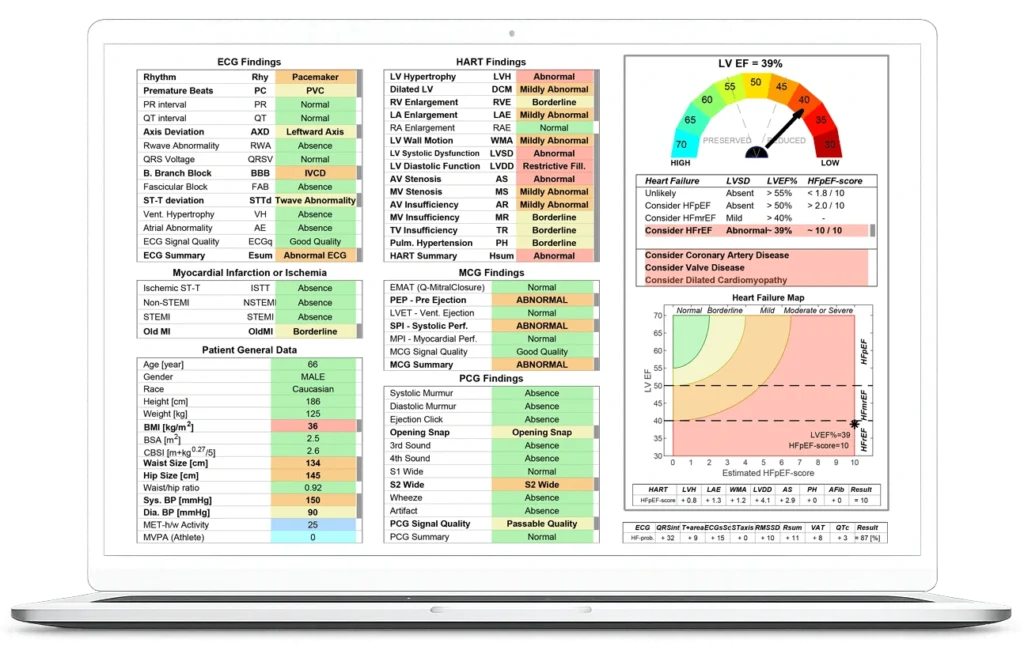
The Diagnostic Evolution:
AI Reporting ECG + Echo Equivalent Findings
Standard ECG hardware only detects electrical issues. Cardio-HART uses synchronized mechanical and acoustic sensing to capture the full cardiovascular picture, identifying “Echo Diseases” traditionally missed by standard ECG tracings.
| Feature | 12-Lead ECG | + | Echocardiography | = | Cardio-HART |
|---|---|---|---|---|---|
| Detects ECG Diseases | ✔ | ✖ | ✔ | ||
| Detects Echo Diseases | ✖ | ✔ | ✔ *(Point of Care) | ||
| LVEF & HF Phenotypes | ✖ | ✔ | ✔ | ||
| Availability | Immediate | Long Wait-times | Immediate |
* Diseases typically detected only by Echocardiography in Secondary Care
Cardio-HART bridges the diagnostic gap between
ECG screening and echocardiography.
Cardio-HART functions as a triage and diagnostic support tool in primary care, helping clinicians identify patients who may require echocardiography or specialist assessment.
Clinically Validated Precision
Cardio-HART is a clinically validated cardiac diagnostic system delivering echo-level insights at ECG speed.
+90%
Echo-agreement rate¹
High correlation with Simpson Biplane LVEF measurements.
94%
Fewer Inconclusive ECGs2
Eliminates “borderline” results that cause diagnostic delays.
160%
More Confirmed Diagnoses2
Identifies structural disease missed by standard ECG.
1 In 70% of cases agreement is >90%; in an additional 25% agreement ranges between 75–90%
2 Source: Cardio-Phoenix Multicentre Study (2022); Validation results presented at ESC-HFA 2023;
peer-reviewed in European Heart Journal: Digital Health (2023).
Clinical Insights Supported by Validation Studies
Heart Failure Indicators
Correlation with echocardiographic LVEF assessment and HF phenotypes.
Valvular Abnormalities
Detection patterns associated with aortic stenosis (AS) and mitral regurgitation (MR).
Structural Heart Disease
Identification of cardiomyopathy-related structural changes.
Multi-Modal Cardiac Analysis
Combined electrical, mechanical, and acoustic signal interpretation.
Diagnostic Certainty at First Contact
What once required a hospital referral can now happen in minutes. Cardio-HART enables earlier clinical decision-making before symptoms escalate.
Beyond Biomarkers
NT-proBNP has a false-positive rate of ~50%3. Cardio-HART provides physiological indicators consistent with heart failure with a Positive Predictive Value (PPV) of over 90%, providing immediate physiological evidence for all three types of HF.
3. Per Pumping-Marvellous, a UK based NGO/Charity promoting the use of NT-ProBNP.
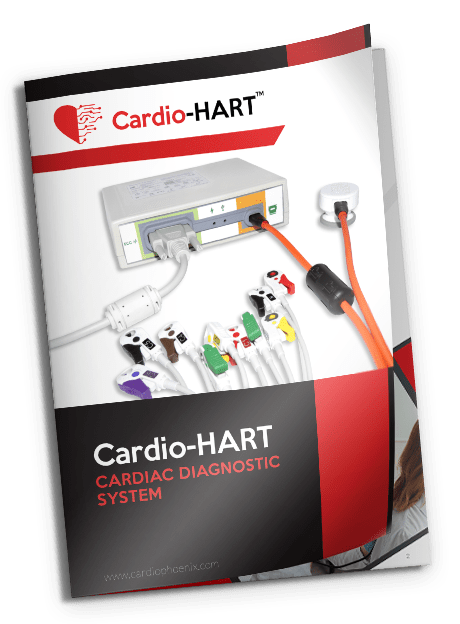
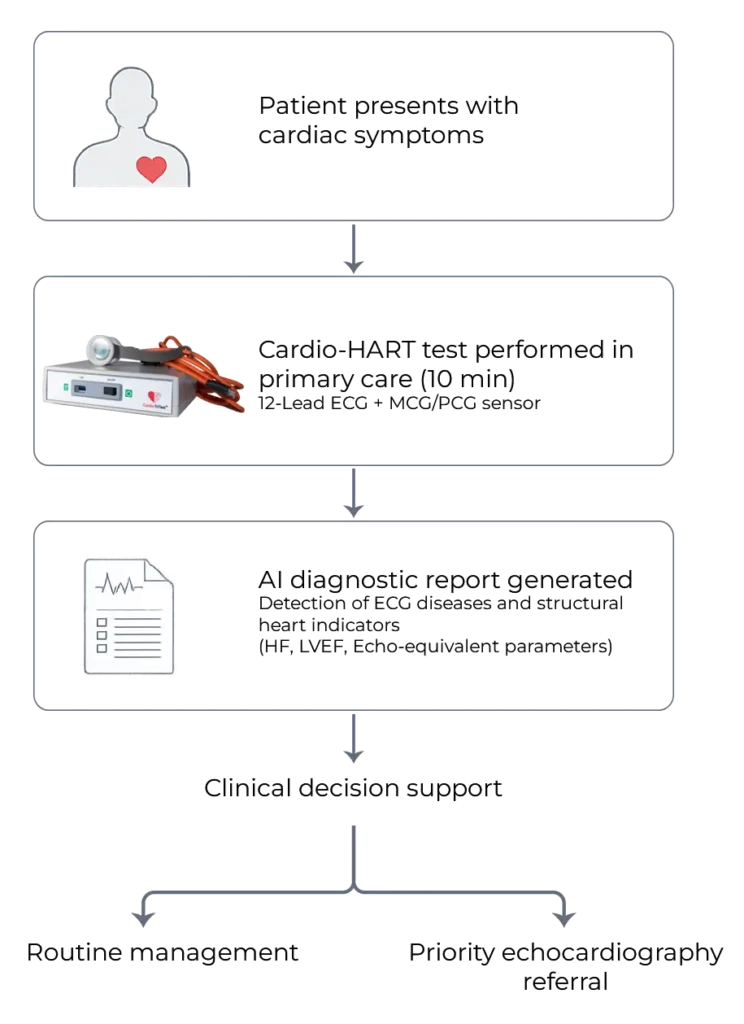
How Cardio-HART Fits into the Clinical Pathway
Cardio-HART functions as a point-of-care cardiac diagnostic system used during routine cardiac examinations in primary care.
The test combines a full 12-lead ECG with additional sensing technology to capture electrical, mechanical, and acoustic cardiac signals.
Within minutes, clinicians receive an AI-generated diagnostic report that helps guide referral and treatment decisions.
The test takes approximately 10 minutes and can be performed during a routine cardiac assessment in primary care.
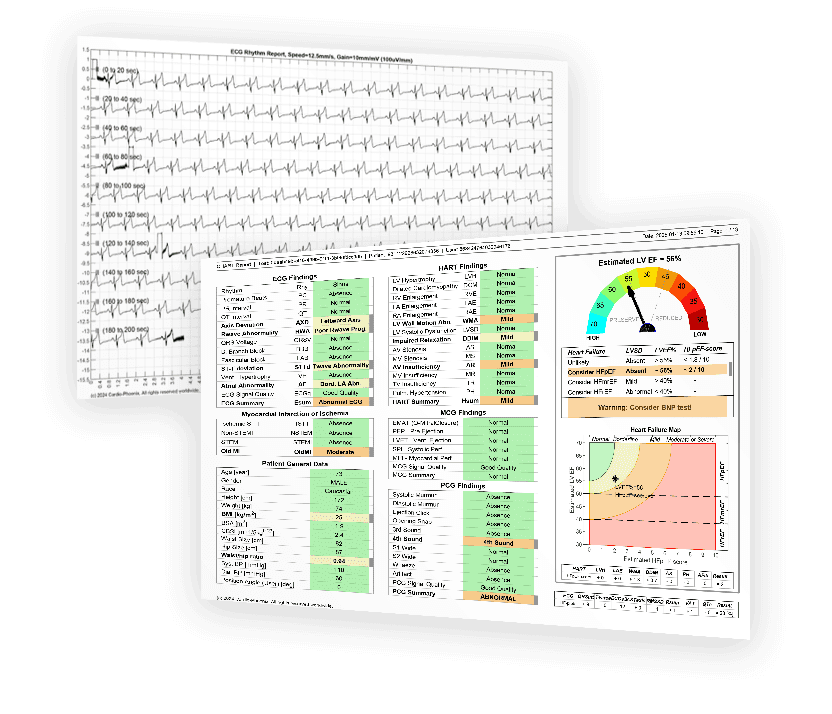
Example Cardio-HART Diagnostic Report
Cardio-HART generates a structured diagnostic report within minutes of the test.
The report combines ECG interpretation with structural and functional cardiac indicators derived from multi-modal sensing.
The report highlights:
- ECG findings (rhythm, conduction, ischemia indicators)
- structural abnormalities detected through multi-modal sensing
- LVEF estimation and heart failure indicators
- detection patterns associated with valvular disease
- clinical interpretation to support referral decisions
Faster Pathways, Smarter Referrals
Cardio-HART eliminates the diagnostic gap between a simple ECG and a resource-limited Echocardiogram.
- Cut Echo Referrals by up to 66%: Triage patients effectively at the point of care.
- Reduce Waiting Lists: Identify high-priority patients who cannot wait for hospital imaging.
- Cost Efficiency: Streamline clinical pathways by reducing low-yield diagnostic steps and defensive referrals.
I replaced my standard ECG with Cardio-HART. I’ve come to trust it to the point that I cannot ignore it. What it detects, the echo confirms.
If the NHS adopted Cardio-HART at scale, it wouldn’t just ease pressure
on echo waiting lists—it would mean fewer unnecessary echos,
getting answers to patients faster.
Dr Teresa Castiello
Cardiology President of Royal Society of Medicine (2023-2025)
ESC cardiomyopathy nucleus and CardioGenomic Council

Precision Triage for Every Care Setting

For General Practitioners
Detect structural heart disease earlier and make more confident referral decisions.

For Cardiologists
Receive higher-quality referrals and focus imaging resources on the patients who need them most.

For Heart Failure Pathway Teams
Support earlier identification of potential heart failure patients and improve prioritization for echocardiography.