

Artificial intelligence is rapidly reshaping healthcare, particularly through the development of AI cardiac diagnostic devices that enable earlier detection of cardiovascular disease. These AI-driven tools help clinicians identify disease earlier, improve workflow efficiency, and deliver specialist-level insights directly at the point of care.
One of the most promising developments is the emergence of AI cardiac diagnostic devices capable of supporting complex cardiology assessments outside specialist settings.
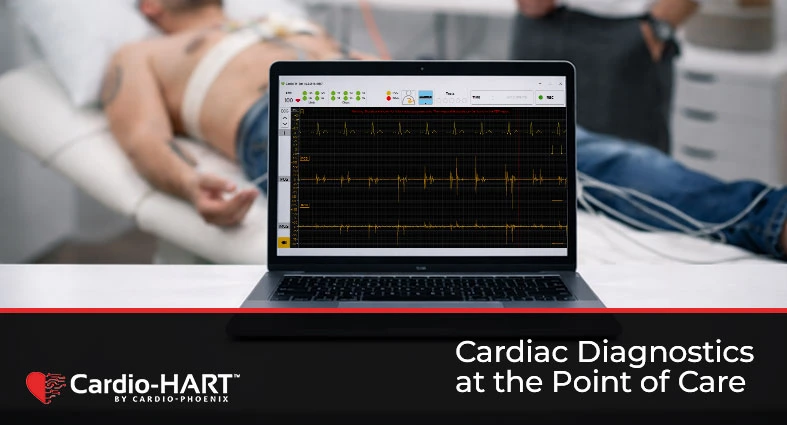
Cardio-HART represents a new generation of such technologies. By combining advanced biosignal sensing with purpose-built artificial intelligence, the device enables clinicians to perform advanced cardiac diagnostics directly in primary care.
This article explores how Cardio-HART contributes to the evolution of AI-driven cardiology, helping healthcare providers detect heart disease earlier, optimize referral pathways, and improve patient outcomes.
What Is Cardio-HART?
Cardio-HART is an AI cardiac diagnostic device designed to assist clinicians in evaluating cardiovascular conditions using advanced biosignal analysis. By combining multiple cardiac signal modalities with artificial intelligence, the system helps clinicians obtain deeper insights into cardiac function directly in primary care settings.
Diagnostic Gaps in Modern Cardiology
Cardiovascular diseases remain the leading cause of death worldwide. Despite advances in treatment, diagnosis often occurs too late due to limitations in current clinical workflows.
Two systemic challenges continue to affect healthcare systems globally.
Limitations in Primary Care Diagnostics
General practitioners frequently encounter patients with symptoms such as fatigue, shortness of breath, or chest discomfort. However, primary care settings typically lack access to advanced diagnostic imaging tools such as echocardiography.
As a result, physicians must rely on limited diagnostic information when making clinical decisions.
This can lead to:
- delayed diagnosis of heart failure or structural heart disease
- unnecessary referrals to cardiology specialists
- increased healthcare system costs
Increasing Pressure on Cardiology Specialists
Cardiologists face growing patient volumes, many of which involve cases that could potentially be evaluated earlier at the primary care level.
This imbalance contributes to:
- long waiting lists for echocardiography
- delayed confirmation of cardiovascular conditions
- reduced time for specialists to manage complex cases
Addressing these challenges requires new diagnostic tools that expand cardiology capabilities beyond hospital settings.
AI and Advanced Biosignals: A New Diagnostic Approach
Cardio-HART introduces a new approach to cardiac diagnostics by combining multiple biosignal modalities with artificial intelligence.
The system integrates:
- electrocardiography (ECG)
- phonocardiography
- mechanocardiography
These signals provide complementary insights into cardiac electrical activity, heart sounds, and mechanical heart function.
Artificial intelligence then analyzes these signals together, generating a comprehensive cardiac diagnostic report.
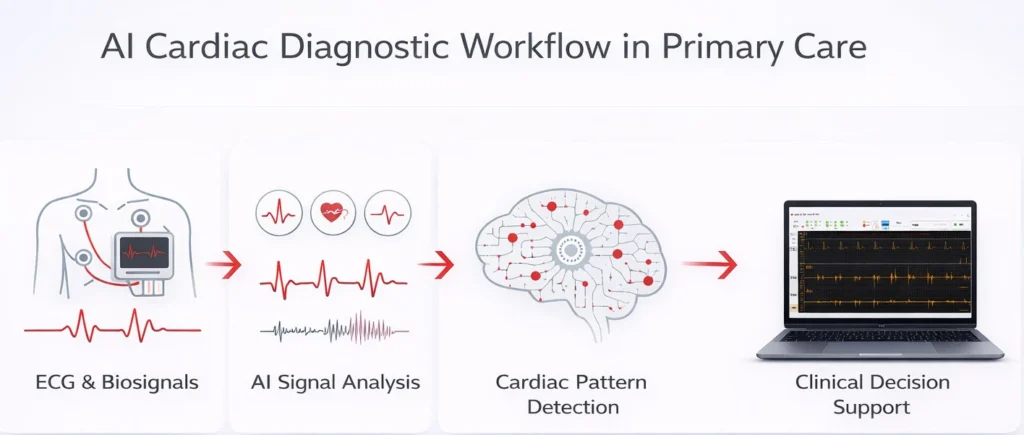
This multi-modal approach allows clinicians to obtain deeper insights into cardiac function than traditional ECG alone can provide.
AI-First Diagnostic Design
Unlike general AI models adapted for healthcare applications, Cardio-HART’s algorithms were designed specifically for cardiac diagnostics.
The system focuses on three essential principles.
Clinical Expertise
The AI system was trained on extensive cardiovascular datasets representing diverse patient populations and cardiac conditions.
Through deep learning models, the system can identify subtle signal patterns associated with structural and functional cardiac abnormalities.
Accessibility for Primary Care
Cardio-HART was designed to be easily used by general practitioners without specialized cardiology training.
The device interface provides:
- intuitive guidance during acquisition
- visual interpretation aids
- clear diagnostic outputs
This allows clinicians to interpret results quickly and confidently.
Reliability and Continuous Validation
Clinical validation and ongoing real-world evaluation are central to the system’s design. The AI models are continuously assessed to maintain high diagnostic reliability and clinical relevance.
Enabling Advanced Cardiac Diagnostics in Primary Care
One of the most significant benefits of AI-enabled cardiac diagnostic devices is the ability to bring specialist-level insights into primary care settings.
With Cardio-HART, general practitioners can:
- perform advanced cardiac assessments during routine consultations
- detect potential structural heart disease earlier
- identify patients who require cardiology referral
This supports more efficient clinical triage and reduces unnecessary specialist referrals.
Early diagnostic insights can also shorten the time to diagnosis for conditions such as heart failure or valvular disease.
Improving Healthcare Efficiency and Patient Experience
Beyond diagnostic capabilities, Cardio-HART contributes to improving healthcare system efficiency.
Faster Clinical Decision-Making
Advanced diagnostics available at the point of care allow physicians to make informed decisions immediately during patient visits.
Reduced Specialist Burden
By improving referral accuracy, cardiologists can focus on patients who require advanced treatment or complex diagnostic procedures.
Increased Patient Confidence
Patients benefit from receiving diagnostic insights during their primary care consultation rather than waiting weeks or months for specialist testing.
Supporting Value-Based Healthcare
Healthcare systems worldwide are shifting toward value-based care, prioritizing better outcomes and cost efficiency.
Early detection plays a critical role in achieving these goals.
AI-driven diagnostic tools such as Cardio-HART contribute to:
- earlier identification of cardiovascular disease
- prevention of advanced disease progression
- reduced hospitalization rates
- improved long-term patient outcomes
Providing advanced diagnostics earlier in the care pathway can significantly reduce healthcare costs associated with late-stage disease management.
Addressing Key Challenges of AI in Healthcare
Adoption of artificial intelligence in clinical practice requires addressing several important challenges.
Cardio-HART incorporates several design principles to support responsible AI integration.
Training and Clinical Education
Built-in guidance and educational resources help clinicians understand how to operate the device and interpret diagnostic outputs.
Ethical and Transparent AI
The system emphasizes transparency and explainable AI principles to support clinician trust and understanding.
Data Security and Privacy
Strict data protection protocols and encryption ensure patient information remains secure throughout the diagnostic process.
Real-World Clinical Impact
Early adopters of Cardio-HART report improvements in clinical workflows across different healthcare environments.
Expanding Access to Cardiac Diagnostics
Clinics in rural or underserved areas can now provide advanced cardiac diagnostics without requiring immediate specialist referral.
Improving Cardiology Triage
Cardiologists may also use Cardio-HART to prioritize patients requiring further imaging or specialist intervention.
The Future of AI in Cardiac Diagnostics
Artificial intelligence is expected to play an increasingly important role in cardiology.
As diagnostic technologies evolve, AI-enabled systems will likely become essential tools for:
- early disease detection
- population health screening
- clinical decision support
Cardio-HART represents an early example of how purpose-built AI can transform diagnostic workflows and expand access to advanced cardiovascular assessment.
Conclusion
AI cardiac diagnostic devices are reshaping how cardiovascular disease is detected and managed.
By combining advanced biosignal sensing with purpose-built artificial intelligence, Cardio-HART enables clinicians to perform more comprehensive cardiac assessments directly in primary care.
This approach supports earlier diagnosis, more efficient referral pathways, and improved patient outcomes.
As healthcare systems continue to evolve, technologies that extend advanced diagnostics beyond specialist settings will play an increasingly important role in improving global cardiovascular care.
Key Takeaways
- AI cardiac diagnostic devices are transforming cardiology workflows
- Early detection of heart disease improves outcomes and reduces healthcare costs
- Cardio-HART enables advanced cardiac diagnostics at the point of care
- Primary care physicians can identify cardiovascular disease earlier