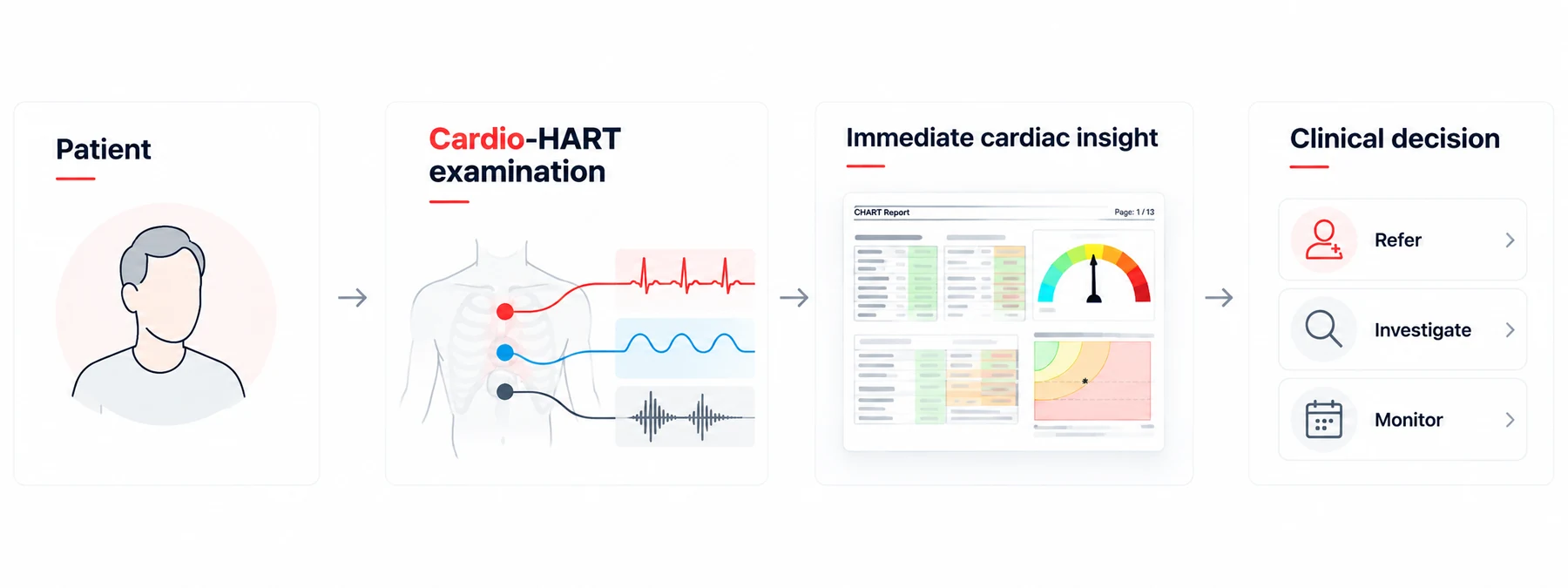


AI-ECG vs Cardio-HART
AI-ECG predicts disease probability.
Cardio-HART delivers clinical findings from real cardiac signals.
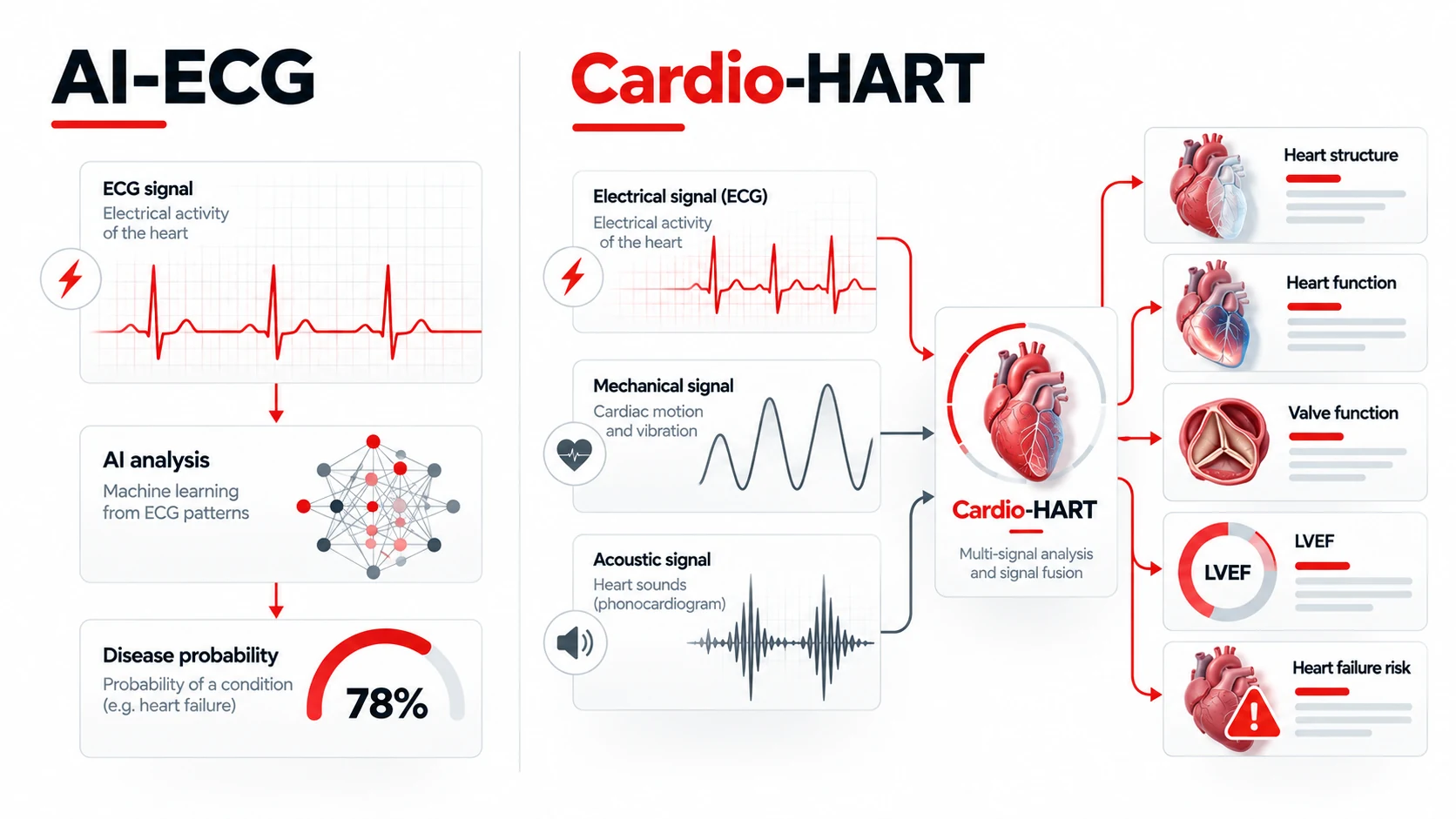
Three Diagnostic Approaches
ECG
Electrical signal only. Detects rhythm and conduction abnormalities.
AI-ECG
Uses machine learning to predict disease probability from ECG patterns.
Cardio-HART
Combines ECG, mechanical signals, and heart sounds to produce echo-equivalent findings.
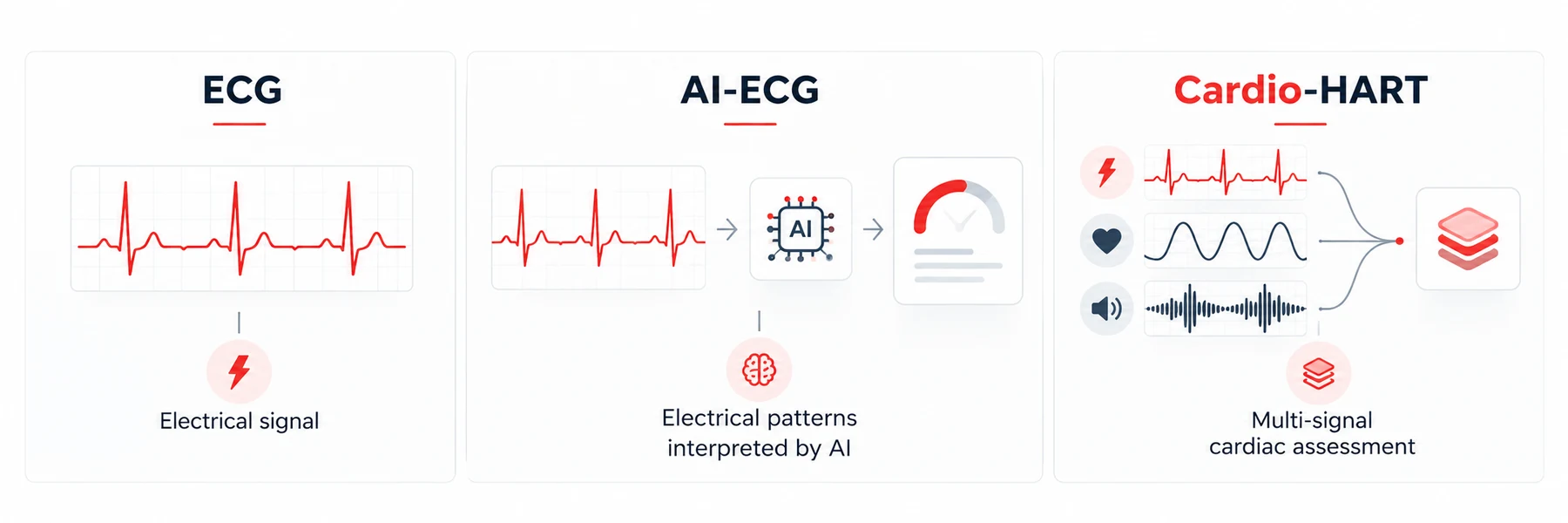
Why AI-ECG Is Limited
- Uses ECG only
- Outputs probability, not diagnosis
- Cannot measure heart mechanics
- Difficult to interpret safely
What Cardio-HART Does Differently
- Measures electrical, mechanical, and acoustic signals
- Evaluates cardiac function
- Produces structured findings
- Supports clinical decisions immediately
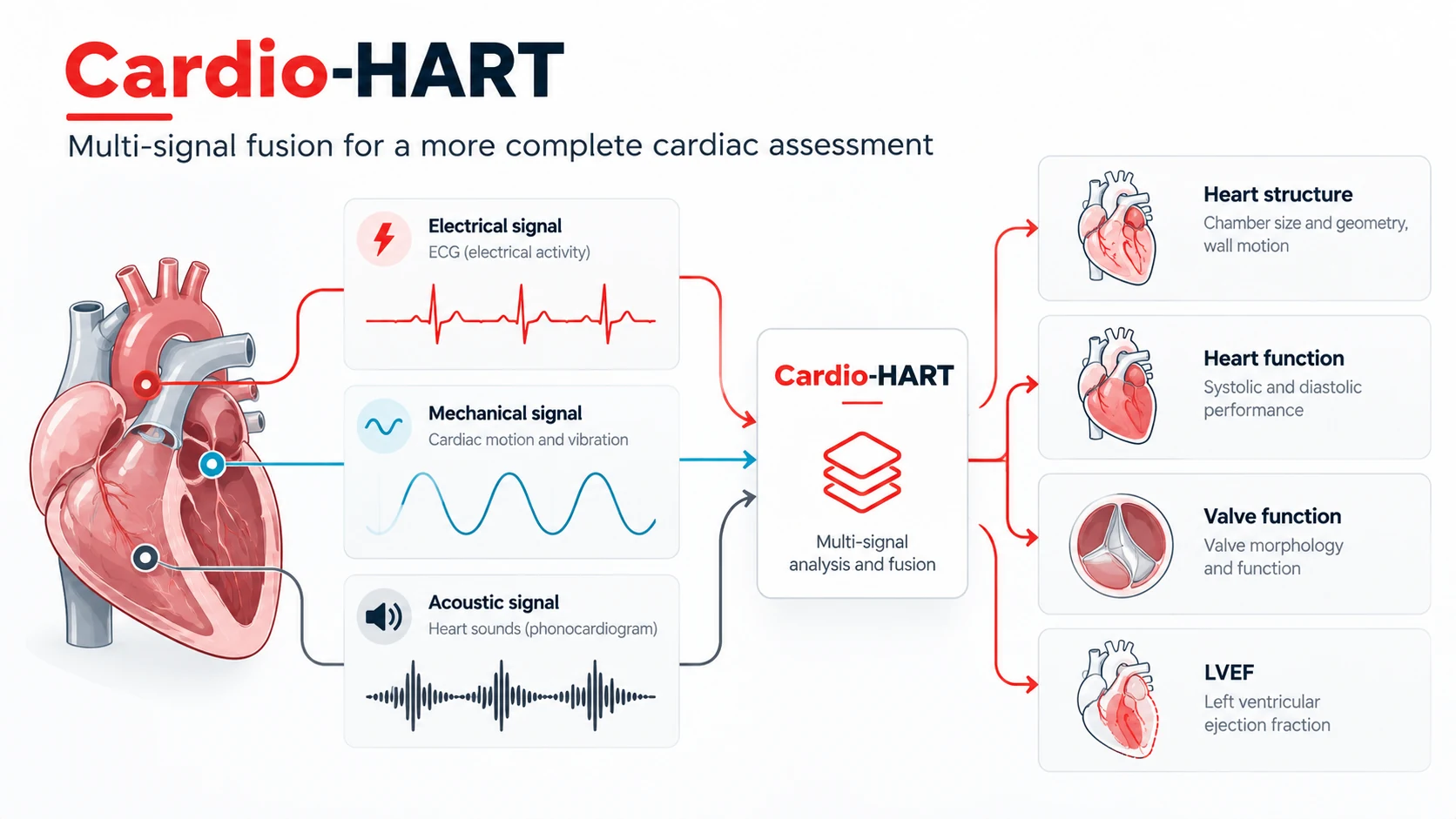
What Clinicians Actually See
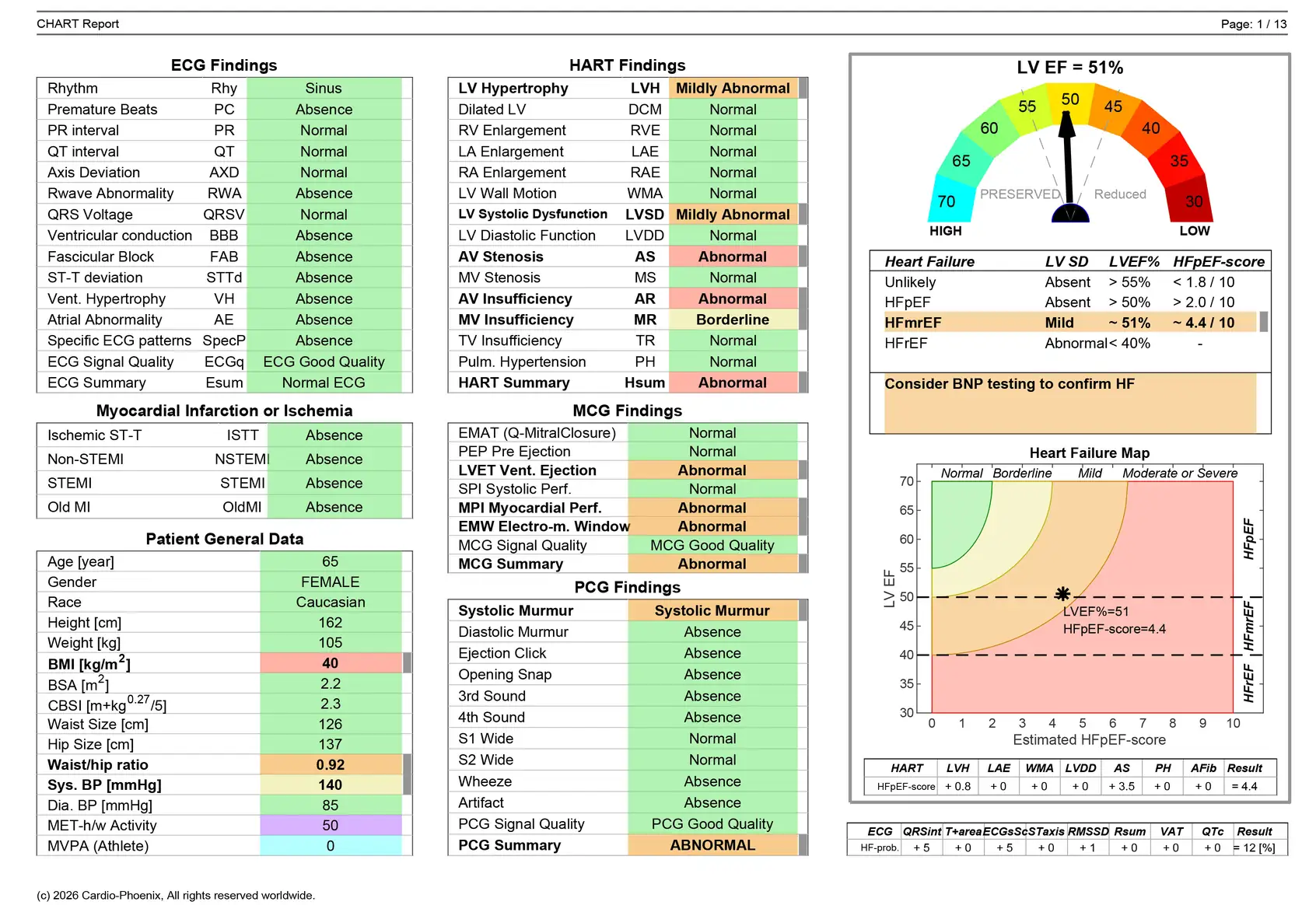
- HART Summary: Abnormal
- LV Hypertrophy: Mildly Abnormal
- LV Systolic Dysfunction: Mildly Abnormal
- AV Stenosis: Abnormal
- AV Insufficiency: Abnormal
- Estimated LVEF: 51%
- Heart Failure Classification: HFmrEF
- Estimated HFpEF Score: 4.4 / 10
Direct Comparison
| Feature | AI-ECG | Cardio-HART |
|---|---|---|
| Input | ECG only | Multi-signal |
| Output | Probability | Clinical findings |
| Heart function | No | Yes |
| Interpretability | Low | High |
Where Cardio-HART Makes the Difference
Primary Care
Immediate insight before referral.
Heart Failure
Detect early functional abnormalities.
Athlete Screening
Reduce false positives from ECG-only screening.